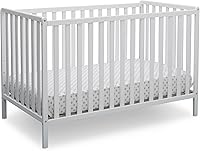
What Is the Height Limit for a Crib?
Check your crib’s manual for the height limit. Many cribs set a 35-inch maximum, measured from the mattress surface to the top of the rail, but the exact rule depends on the crib.
On this page (7 sections)
- What does the height limit for a crib measure?
- How do you measure your child for the crib cutoff?
- Does lowering the mattress change the height limit?
- Is crib height different from the child’s height limit?
- When should a child leave the crib?
- What if the manual doesn’t give a clear height limit?
- What should you do when your child reaches the crib height limit?
A crib’s height limit is the maximum child height allowed by its manufacturer, often 35 inches, measured from the mattress surface to the top of the rail. Check your crib’s manual for its exact cutoff and measurement method.
That height rule is separate from age-based advice about when to move a child to a bed. A child who reaches the crib’s limit should move out even if they seem settled, and climbing attempts may mean it’s time to transition sooner.
What does the height limit for a crib measure?
The height limit usually measures your child’s height against the top of the crib rail, not the crib’s total height. Many crib manuals use a 35-inch cutoff, but the manual for your model is the authority.
Look for a maximum child height or a stop-use instruction in the manual. If the wording is unclear, contact the crib manufacturer before continuing to use it.
Don’t estimate the cutoff from a crib’s outside dimensions or assume every crib uses the same rule. A mini crib and a full-size crib can have different instructions.
How do you measure your child for the crib cutoff?
Measure your child’s standing height from the floor to the top of their head, then compare it with the manual’s stated limit. If the manual specifies a different measurement method, follow that instruction.
The crib rail is measured from the mattress surface, not from the floor. The mattress support position changes how far the rail rises above the mattress, but it doesn’t change the manufacturer’s stated child-height cutoff.
If your child is close to the limit, check their height again and plan the next sleep space. Don’t wait for a climbing attempt to confirm that they’ve outgrown the crib.
Does lowering the mattress change the height limit?
No. Lowering the mattress support doesn’t increase the maximum child height in the manual, even if it makes climbing more difficult.
Use the lower support positions as directed when your child’s development calls for them. For example, the Dream On Me Full Size Carson 3-in-1 has 4 adjustable mattress height options.
A lower mattress can be useful during the crib stage, but it isn’t a way to keep a child who has reached the height limit in the crib. Stop using the crib when the manual says to do so.
Is crib height different from the child’s height limit?
Yes. Crib height describes the furniture; the height limit describes how tall a child may be while using it.
A crib’s listed height is generally measured from the floor to the top of the rail.
Keep the two measurements separate when comparing cribs or checking fit in a room. Neither the crib’s outside height nor its adjustable mattress positions override its stop-use instructions.
A mini crib may have different dimensions from a full-size model. The Dream On Me 4-in-1 Mini Baby Crib has 3 mattress support positions; check its manual for the child-height cutoff.
When should a child leave the crib?
Move your child out when they reach the crib’s height cutoff or can climb out, whichever comes first. The first condition is a manufacturer’s limit; the second is a safety concern that can arise before a child reaches that height.
Age-based transition advice is a separate consideration. Your child’s age may help you plan the change, but it doesn’t cancel the crib’s height cutoff.
Some convertible cribs become toddler beds or other bed types with separate conversion parts. Before choosing a model for later stages, compare Crib 4-in-1 vs 5-in-1: What Parents Should Know and check which stages and parts each crib supports.
A mini crib with a changer may suit a smaller room, but it still has its own use limits. The Dream On Me Jayden 4-in-1 Convertible Mini has 3 mattress support positions and a stated maximum height recommendation of 35 inches.
What if the manual doesn’t give a clear height limit?
Contact the crib’s manufacturer for the stop-use rule if you can’t find it or don’t understand how it’s measured. Share the model name or number so they can point you to the right instructions.
Don’t treat a mattress adjustment or a crib’s ability to convert as proof that it can be used past its limit. For conversion options, compare best 5-in-1 convertible cribs, best 6-in-1 convertible cribs, and best 4-in-1 convertible cribs, then confirm each model’s manual and required conversion parts.
What should you do when your child reaches the crib height limit?
When your child reaches the crib’s stated cutoff, stop using that crib and move them to a suitable next sleep space. If they try to climb out before then, treat that as a reason to make the transition sooner.
Use the manual to decide the height cutoff, not a general age guideline or an adjustable mattress position. If you’re deciding whether a bassinet is needed earlier in your setup, see whether you need a bassinet, whether a baby bassinet can go on your bed, and why a baby won’t sleep in a bassinet.
Frequently asked questions
What is the maximum height for a child in a crib?
Check the crib manual for the child-height cutoff. Many cribs use 35 inches, measured from the mattress surface to the top of the rail, but the exact limit and measurement method vary by model.
Stop using the crib once your child reaches its stated limit, even if they haven't tried to climb out.
Is the crib height limit the same as the mattress height?
No. A crib's child-height limit usually refers to your child's height compared with the top rail, while mattress height is the mattress support's position above the floor.
Lowering the mattress can make it harder to climb out, but it doesn't change the crib's stated maximum child height.
Should I move my toddler out of the crib at 35 inches?
Follow your crib's manual, which may set a 35-inch cutoff or another limit. Also pay attention to signs that your child can climb out, since the fall risk can call for a transition sooner.
Age-based readiness is a separate question from the crib's height limit.
Does lowering the crib mattress raise the height limit?
No. Lowering the mattress support changes the mattress position and may make it harder for a child to climb out, but it doesn't raise the crib's height limit.
Use only the support positions allowed by the manufacturer, and stop using the crib at its stated cutoff.