
Crib That Converts to a Daybed: Explained
A crib that converts to a daybed is a single piece of furniture that changes from a baby bed into a child-sized bed. This smart design lets you use the same frame for years, saving you money and reducing waste.
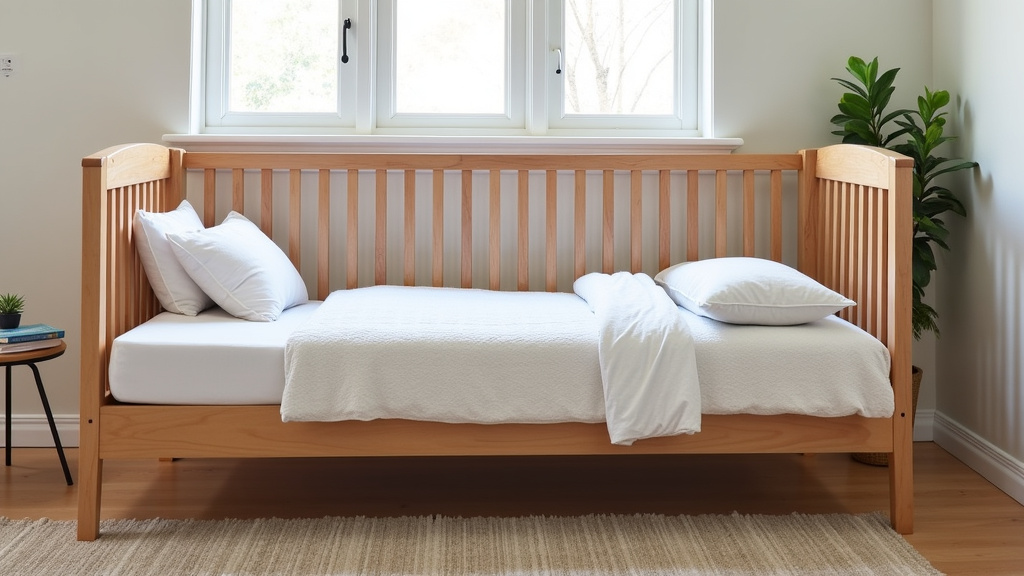
These 2-in-1 cribs come with an interchangeable end panel that you swap for a shorter safety rail. It turns the full crib into a daybed suitable for a toddler. We found this design is a practical way to extend the life of your nursery furniture.
- A convertible crib is a baby bed that transforms into a daybed or toddler bed.
- You save money by not buying a separate toddler bed later.
- The conversion usually involves swapping the front crib panel for a low rail.
- This gives your growing child a safe, big-kid bed they recognize.
- It’s an eco-friendly choice that reduces furniture waste over time.
Below, we break down exactly how a crib-to-daybed conversion works, what to look for when shopping, and how to handle the transition safely.
How a Convertible Crib Turns into a Daybed
A convertible crib isn’t magic, but it’s smart engineering. At its core, it’s a standard baby crib designed with one special feature: the front panel can be removed. This panel is typically the taller side with vertical slats.
Once you remove that front piece, the crib frame looks like a small bed with three solid sides and one open end. To complete the daybed transformation, you install a low safety rail. This rail is much shorter than the original crib side, often just a few inches high.
This low rail prevents your child from rolling out while making the bed feel open and accessible. It’s like giving your toddler a gentle “welcome to your own bed” without the jump from crib to full-size mattress. We found this design is exactly what makes the transition less jarring for little ones.
The Standard 3-in-1 vs. 4-in-1 Conversion
You’ll often see cribs labeled as “3-in-1” or “4-in-1.” This tells you how many stages the furniture can handle. A 3-in-1 convertible crib typically goes from crib to daybed to a toddler bed (which is essentially a daybed with a slightly taller guardrail). A 4-in-1 model adds a final stage: converting into a full-size bed.
For the daybed feature, both types work the same way. The key difference is in the included hardware. Always check exactly which conversion kits are sold with the crib. Some brands include the toddler rail; others require a separate purchase.
Why Families Choose a Convertible Crib
The biggest reason is simple economics. You’re buying one sturdy piece of furniture that serves your child from birth to around age five or six. That eliminates the need for a separate, often expensive, toddler bed.
Think about it. You invest in a high-quality crib that meets safety standards, and you get to use that same trusted frame for years. According to the Consumer Product Safety Commission (CPSC), cribs are a major purchase, and extending their use makes financial sense.
Saving Money and Reducing Waste
Let’s do quick math. A quality standalone toddler bed can cost anywhere from $100 to $300 or more. A convertible crib might cost $150 to $400 initially, but you avoid that second purchase entirely. You’re saving the cost of a whole bed frame.
From a sustainability perspective, this is a win. You’re keeping one large item out of the landfill and reducing the demand for new manufacturing. We found that choosing a convertible crib is one of the most practical eco-friendly decisions a new parent can make for the nursery.
Easing the Toddler Transition
The move from crib to bed is a milestone that can be stressful for everyone. A convertible crib eases this change. Your child isn’t moving to a strange, new bed. They’re just sleeping in the same familiar space, only now with an open side they can climb in and out of themselves.
This familiarity can reduce bedtime anxiety. The bed looks and feels like their crib, just modified. Many pediatric sleep consultants note that maintaining a consistent environment helps children adjust to new routines more smoothly.
Key Features to Look for When Shopping
Not all convertible cribs are created equal. You’ll want to look closely at the construction and included parts to ensure you’re getting a good value and a safe product.
Conversion Hardware and Kits
This is the most important detail. Does the crib come with the toddler daybed rail included? Or is it sold separately? Buying the crib without the rail means it’s just a crib, not a convertible one.
Also, check the instructions. We recommend looking for models with tool-free conversion. Some clever designs use simple knobs or pins, making the switch from crib to daybed a job you can do in minutes without a toolbox.
Parts Checklist
- Low safety/toddler rail
- All necessary brackets and screws
- Clear, illustrated conversion instructions
- Additional guardrails for the full-size bed conversion (if 4-in-1)
Build Quality and Materials
You’re looking for a crib that will last. Solid wood construction is generally more durable and stable than particleboard or MDF. Check the weight limits listed by the manufacturer. A good convertible crib should support your child from infancy up to 50 or 60 pounds for the daybed stage.
Run your hand along the surfaces. They should be smooth with no sharp edges or splinters. The finish should be non-toxic and lead-free, which is a requirement for all cribs sold in the US, but it’s worth verifying.
Safety Standards: Your Non-Negotiables
When we talk about baby gear, safety isn’t optional. The CPSC has strict federal safety standards for all cribs sold in the United States. Any new crib you buy must meet these.
Meeting Federal Guidelines
The standards cover everything from slat spacing (no more than 2-3/8 inches) to structural integrity and mattress support. A convertible crib must meet these standards in both its crib and daybed configurations. Reputable manufacturers will state that their product is compliant.
You should never use a crib that has been recalled, is missing parts, or is visibly damaged. The CPSC maintains a public database of recalls that you can check before making a purchase.
Safe Sleep is the Top Priority
The American Academy of Pediatrics (AAP) provides clear guidelines for safe sleep to reduce the risk of Sudden Infant Death Syndrome (SIDS). These rules apply to the crib stage. A firm mattress and a fitted sheet are the only two things that should be in the crib with your baby.
Once converted to a daybed, your older toddler may have a blanket or stuffed animal. But the foundation of safe sleep you built with the original crib design remains crucial.
Your Convertible Crib Shopping Checklist
Feeling ready to look? Keep this list handy. It boils down the key points into a simple guide.
- Conversion Type: Confirm it converts to a daybed and check if it goes further to a full bed (4-in-1).
- Included Hardware: Verify the daybed rail is in the box, not an extra purchase.
- Material Quality: Opt for solid wood or high-quality, non-toxic composites.
- Weight Limits: Check the maximum weight for the toddler/daybed stage.
- Safety Certification: Ensure it states compliance with current CPSC safety standards.
- Mattress Fit: Confirm the crib fits a standard-size mattress (27 1/4″ x 51 5/8″).
Making the Transition: From Crib to Daybed
Once you have your convertible crib, the right time to make the switch is key. Most experts, including those at the Sleep Foundation, suggest waiting until your child is around 18 months to 3 years old. Signs of readiness include trying to climb out of the crib.
Tips for a Smooth Changeover
Talk about the “big kid bed” excitedly in the days leading up to the change. Let your child help pick out new sheets. This builds positive anticipation.
Do the actual conversion during a calm time, not when you’re in a rush. Frame it as a fun project. You might say, “Look! We’re taking this side off so you can climb in all by yourself.”
Setting the Scene for Safety
Once the low rail is on, do a safety sweep of the room. Move the bed away from windows, blinds, and electrical cords. Secure heavy furniture to the wall. Your curious climber now has access to the whole room at night.
Consider adding a soft night light to help your child navigate. The goal is to make the space feel secure and accessible, reducing the risk of a fall or a nighttime tumble.
Maintaining Your Convertible Crib Over the Years
You’ve made a smart, long-term investment. With proper care, that sturdy frame can serve multiple children or be passed along.
Cleaning and Care
Regularly check all screws and bolts and tighten them if needed, especially after conversion. Use only manufacturer-recommended cleaning products to avoid damaging the finish. A damp cloth with mild soap is usually sufficient.
When the daybed stage is over and you convert it to a full-size bed, store the low toddler rail carefully. If it came with extra parts for the full-size rails, keep them together in a labeled bag. Your future self will thank you.
This thoughtful piece of furniture grows with your child, offering value, convenience, and a familiar, safe place to sleep through several important years. We found that focusing on these details helps you choose a crib that truly works for your family.
Conclusion
A crib that converts to a daybed offers a smart, long-term solution for your child’s early years. You get the safety of a newborn crib with the added value of a toddler bed in one purchase. This choice saves you money, reduces waste, and can make the transition to a big-kid bed less stressful for everyone. We found the key is to check the included hardware, build quality, and safety standards before you buy. Your next step is simple: use our shopping checklist to compare models and confirm the conversion rails are included. This one decision provides a safe, familiar sleep space that grows right alongside your child.
Frequently Asked Questions
Can I use my existing crib mattress for the daybed?
Yes, in most cases. The daybed stage uses the same mattress as the crib stage, as the frame dimensions don’t change. Always verify the mattress fits snugly without gaps, which is a key safety requirement for both crib and daybed use.
What is the typical weight limit for a convertible crib in daybed mode?
Most convertible cribs support a child up to 50 or 60 pounds in the daybed configuration. You should always check the manufacturer’s specific limit, as exceeding it can compromise the structure’s safety and stability.
Do I need to disassemble the whole crib to convert it to a daybed?
Not usually. The conversion primarily involves removing the front crib panel and installing the low toddler rail. Many modern designs make this a quick, tool-free process that doesn’t require a full disassembly of the frame.
How long can my child safely use the daybed before it needs to be converted to a full-size bed?
This depends on your child’s size and the crib’s weight limit. The daybed stage is typically suitable from toddlerhood up to about age 5 or 6. Once your child approaches the maximum weight limit, it’s time to convert it to a full-size bed or transition to a larger bed.
Is it safe to add decorative pillows or bumpers to the daybed?
For a toddler’s safety, you should avoid adding pillows, bumper pads, or thick blankets to the daybed. The safest sleep environment remains simple. A lightweight blanket or a small stuffed animal is sufficient once they transition out of the crib.